Tuesday, 19 April 2016
Audi A1 1.4 TFSI
Despite the success of the Mini Cooper and America's newfound love of hatchbacks, Audi continues to deny us the all-new A1. There are a variety of reasons for excluding the pint-sized hatch from the U.S. market (marketing, brand image, average transaction price, etc.), but the introduction of the twin-charged A1 here at the Paris Motor Show has us questioning all of them.
Packing a 1.4-liter TFSI (read: both turbo and supercharged) inline four-cylinder engine, the A1 puts out 185 horsepower and 185 pound-feet of torque, sends it to the front wheels through a seven-speed S tronic gearbox and can sprint to 60 in 6.9 seconds on its way to a top speed of 141 mph. Think of it as the luxury alternative to the Ford Fiesta, with a price tag to match: €24,250 or just over $30k at current exchange rates.
Range Rover Evoque shows up ready for production
Land Rover's critical new Range Rover Evoque debuted today at the Paris Motor Show, ushering in a brave new world for the British off-roader brand. The debut continues the company's march toward the softroader segment, a movement first started with the LR2/Freelander and now resulting in the handsome new three-door seen here.
Slated to be joined shortly by a five-door version, the compact Evoque fits right into the Land Rover mold design-wise, albeit with a surprising amount of surface jewelry for such a sleek two-box shape. From the protruding fog lamps to the horizontal matte chrome-trimmed hood intakes to the unique divots atop the wheel lip moldings and the somewhat fiddly taillamp lenses, there's quite a bit to draw one's eye. The overall impression one gets of the vehicle on the show floor is one of imposing width, a feeling that's magnified when you realize that an individual of average height can see over the vehicle when standing next to it.
The drivetrain is no less revolutionary for the brand, with a 2.0-liter turbo four pushing out 240 horsepower through a new permanent all-wheel-drive system. Key options for the Evoque include Adaptive Dynamics and Magneride adaptive damping and a massive panoramic roof which makes the interior feel like a greenhouse even on the Paris show floor. While the littlest Rover lacks the full-on four-wheel-drive weaponry of its bigger siblings, it does feature the latest distillation of the company's Terrain Response Control, and with good arrival and departure angles, it should still be better than most crossovers when it comes to tackling off-pavement activities.
Sunday, 17 April 2016
Mercedes-Benz CLS comes on strong
The 2012 Mercedes CLS is the second act of the car that invented both the market segment and the grammatical quandary known as the "four-door coupe." Made dramatically more bold for this go-round, it features an upright grille that flows back into a rump that disappears in photos but holds its own in person. The new sedan is also lighter, with aluminum doors that are 52 pounds less heavy and an aluminum hood, front fenders, trunk lid and parcel shelf.
Along with the design, the engines are the story. There will be four available, starting with two 3.5-liter V6 engines in Europe. One is a 265-horsepower diesel engine and the other a 306-hp gas V6 with standard stop/start. Next comes the 2.5-liter four-cylinder diesel with 204 hp, and last to arrive is the V8 CLS 550 putting out 402 hp and 443 lb-ft of torque.
LED High Performance Active Headlights, Direct-Steer electromechanical steering, a tweaked suspension lifted from the E-Class, and a host of interior trim options that range from carbon fiber to high gloss brown burl walnut are among the many changes on the car.
Facelifted 2012 Nissan GT-R
Well look what we found tucked away in a glass-enclosed corner of the Nissan stand. What you're looking at is the 2012 Nissan GT-R, complete with a fascia comprised of a restyled bumper, air-intakes and LED daytime running lamps. A new diffuser pulled from the SpecM is mounted out back, along with new lightweight wheels that may or may not be included in the final package. Our insider wouldn't give us any details on power increases, but they did say we should keep an eye out for an official announcement in the coming months.
Hyundai teams up with Brabus for sportier i20
After a 2008 introduction, the Hyundai i20 is back at the Paris Motor Show but this time it's got a bit of an attitude. Hyundai has teamed up with Brabus to create the i20 Sport Edition. So far the only details released involve the appearance changes. The front skirt and wheel arches take on an angrier appearance while Yokohama rubber gets wrapped around a set of 17-inch Brabus alloy wheels. The black mesh looks good next to the black bezel around the headlights, as well as the added LED daytime running strips.
While the outside sports that subtly-cool hot-hatch look, the inside looks it was "designed" by the Great Pumpkin after a night spent throwing one too many back. Though the orange-black paint scheme is a little much, the sporty Recaro seats, leather-lined surfaces and seven-inch touchscreen are welcome additions.
We're still waiting to hear what is powering the Hyundai i20 Sport Edition, but with Brabus involved we can only hope for the best. The car will enter production during the first half of 2011, and it will be released as a limited-edition model, available in both three and five-door versions
Monday, 4 January 2016
Yamaha Old Vixion Resmi Di Suntik Mati Karena EURO 3 ?
Setelah sempat dibangkitkan kembali oleh YIMM,, yamaha old vixion memang di jual kembali
namun di 2015 akhir ane ke diler yamaha sudah tidak nampak lagi yamaha old vixion dijual, lihat di brosur pun sudah tak nampak lagi, resmi disuntik mati kah?
pertamax7.com belum konfirmasi langsung ke YIMM, namun kalaupun yamaha Old vixion di suntik mati pun wajar
hal ini karena regulasi euro 3 resmi diberlakukan… hal ini di tanggapi YIMM dengan meluncurkan yamaha New Vixion advance euro 3 dan suntik mati
- yamaha scorpio z
- yamaha new vixion lightning euro 2
- dan kemungkinan yamaha old vixion yang memang euro 2 juga
namun spekulasi berkembang bahwa yamaha old vixion akan di produksi kembali dengan mesin turunan yamaha new vixion advance/ yamaha jupiter mx king 150 euro 3, etahlah…
yang jelas prestasi yamaha old vixion sangat gemilang usai suntik mati
- Yamaha Old Vixion pasca diskontinyu pakai Cylinder Block Yamaha New Vixion 1PA, bukan 3c1 ?
SPORT Januari – November 2015
Yamaha New V-IXION 251.937
Yamaha V-IXION 124.451
Honda CB 150R 91.823
Honda CBR 150R 63.024
Honda Verza 61.507
Yamaha R15 48.189
Kawasaki Ninja 150 (fairing) 19.564
Kawasaki Ninja 150 (naked) 15.306
Kawasaki KLX 150 12.122
Kawasaki Ninja 250 11.538
Yamaha New V-IXION 251.937
Yamaha V-IXION 124.451
Honda CB 150R 91.823
Honda CBR 150R 63.024
Honda Verza 61.507
Yamaha R15 48.189
Kawasaki Ninja 150 (fairing) 19.564
Kawasaki Ninja 150 (naked) 15.306
Kawasaki KLX 150 12.122
Kawasaki Ninja 250 11.538
Sunday, 3 January 2016
Harga All new Suzuki Satria F 150 injeksi Rp.23 Jutaan di Jawa Tengah, Mekanik lagi di Training ?
nah info soal harga satria F injeksi ini memang sudah beredar : Harga All New Suzuki Satria F150 Injeksi 2016 maksimal Rp.23 juta .. itu di pulau jakarta gan,, sedangkan di Jawa tengah,, harga satria F injeksi itu gosipnya tembusRp.23 jutaan
info yang datang dari om yunianto yang kemaren kasih brosur suzuki satria F tembus 18,23 HP di mesin ternyata juga tanya kepada sales berapa banderol suzuki satria F injeksi,, Rp.23 jutaan mas jawab sales sambil memberikan brosur ( biasanya bonus nomer hape ) dan menyatakan kalau mekanik bengkel suzuki sedang training all new suzuki satria F150 injeksi 2016
nah kalau di pulau jawa bagian tengah harga all new suzuki satria F injeksi 2016 R.23 jutaan, maka harga suzuki satria F injeksi di pulau jakarta mungkinRp.22 jutaan gan, klop seperti cerita kemaren..
kapan meluncurnya malah belum tahu tanggal pasnya… hemmm wis ra sabar rekk…..
last, sudah makin jelas nih,,, bentar lagi launching… ada yang mau beli?
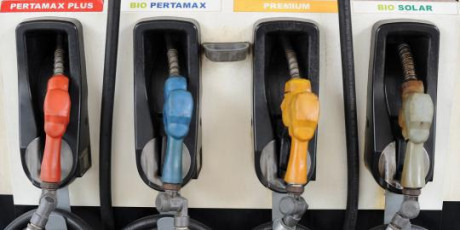
Harga BBM Pertamina Jenis Pertamax Dan Pertalite Juga Turun 5 Januari 2016
soalnya butuh, sudah terlanjur tanda tangan kontrak dengan leasing ambil motor kudu siap dan iklhas membeli kebutuhan utama sang tungganga, yakni bahan bakar sebagai barang komplementar supaya mesin si sincan yamaha new vixion ane bisa menggerung.. nah 5 januari 2016 harga bahan bakar pertamina premium ron 88 dan solar turun.. selain itu pertamax ron 92 dan pertalite juga turun harga,, juosss
sementara itu, pertamax dan pertalite baru ada beritanya hari ini, Ahad 3 januari 2016
info dari Direktur Pemasaran Pertamina, Ahmad Bambang kepadadetikFinance menjelaskan
“Iya, harga Pertalite turun jadi Rp 7.950 per liter, dan Pertamax jadi Rp 8.450 per liter,”
mulai berlaku selasa 5 januari 2016 pukul 00.00 .. sebagai catatan dulu….
harga pertalite ron 90 Rp.8200 per liter jadi turun Rp. 250 jadi Rp.7950
sedangan harga pertamax ron 92 Rp.8650 per liter jadi turun Rp.200 menjadiRp.8450
^ harga pulau jakarta lho ya….
kenapa turun? jelas karena nggak naik, ,, siap2 saja kalau naik akibat faktor harga minyak mentah dunia.. kurs dollar yang menggila, dan faktor lain..
last, kalau di pulau jakarta segitu, di daerah lain berbeda, mungkin di pulau jawa nambah Rp.100 biasanya, di pulau lain ya beda2
New Honda CB150R StreetFire Special Edition Tampil Makin Agresif
Hadir sebagai bentuk permintaan dari para pecinta motor sport tipe naked, New Honda CB150R StreetFire muncul dengan varian Special Edition yang tampil beda dan agresif.
New Honda CB150R StreetFire Special Edition yang diluncurkan PT Astra Honda Motor (AHM) sebagai jawaban akan permintaan pecinta motor sport yang ingin tampil beda dan agresif.
Tren di segmen motor sport saat ini menunjukkan bahwa konsumen ingin tampil beda dengan mengekspresikan kreasi melalui sepeda motor kesayangannya.
"Menyadari hal ini, AHM meluncurkan All New Honda CB150R StreetFire Special Edition yang tampil agresif dan mampu menciptakan kebanggaan saat dikendarai," terang Margono Tanuwijaya, Direktur Pemasaran AHM
Hadirnya pilihan terbaru motor sport 150cc ini juga semakin memperkuat jajaran motor sport Honda yang memiliki desain dan performa tinggi di pasar sepeda motor Tanah Air.
Untuk menunjang tampilan agresif pada naked sport bike Honda ini, AHM menyematkan visor baru dan undercowl dengan desain sporti yang menyempurnakan aerodinamika dan performa berkendara.
New Honda CB150R StreetFire Special Edition tampil agresif dan mampu menciptakan kebanggaan saat dikendarai. Terlebih dengan dilengkapinya 2 warna baru yaitu Raptor Black dan Speedy White.
"Dengan berbagai perubahan yang membuatnya berbeda, kami berharap motor sport Honda ini mampu menjadi pilihan terbaik masyarakat nanti." harap Margono.
All New Honda CB150R StreetFire memiliki performa mesin 150cc, DOHC 4 katup, 6 kecepatan, berpendingin cairan (liquid-cooled). Akselerasi yang dihasilkan mampu mencapai 10,5 detik (0-200m).
Model ini pun dapat dipacu hingga 125 km/jam dengan tetap menghasilkan tingkat konsumsi bahan bakar yang efisien mencapai 40.6 km/l (EURO 2) dan 37.9 km/l (EURO 3) dengan metode ECE R40.
All New Honda CB150R StreetFire mengaplikasikan rangka teralis yang memiliki keseimbangan yang tinggi antara kekuatan dan kelenturan berkat pengaplikasian alumunium engine hanger.
Penyematan ban yang lebih besar pun meningkatkan daya cengkram maksimal sekaligus memberikan rasa aman baik saat menikung maupun pada kecepatan tinggi, dengan dukungan rem cakram depan berukuran 276mm yang meningkatkan kemampuan pengereman.
New Honda CB150R StreetFire Special Edition dijual dengan harga Rp 26.400.000. Sedangkan tipe standar yang sebelumnya telah ada, dipasarkan dengan harga on the road (OTR Jakarta) Rp 25.400.000,-.
Astra Honda Motor menargetkan penjualan All New Honda CB150R StreetFire sebanyak 21.000 unit per bulan.
Saturday, 2 January 2016
Rumor Mesin Ducati : Mungkinkah Pakai V4, Supercharger atau Turbocharger?
Ducati adalah pabrikan yang cukup terkenal sebagai produsen sepeda motor dengan mesin yang terkenal ganas dan galak. Pembawaan motor ini memang tidak setenang Honda, bahkan Honda CBR1000RR Fireblade yang dianggap tergalak di line up honda pun jauh lebih easy to use dibanding Ducati 1199 Panigale. Racikan keganasannya itu ada pada komponen mesinnya yang mendekati ke spek sirkuit dan rancangan mesin L-Twin. Namun sepertinya tahun 2016 menjadi ujian berat bagi Ducati.
Dikutip dari Auto Evolution, beberapa pabrikan kini harus berjuang melewati regulasi Euro 4 pada 2016. Ini artinya mau tidak mau pabrikan harus membuat mesin dari nol demi lulus regulasi, tidak terkecuali mesin L-Twin Ducati. Bagaimanakah caranya melompati regulasi tersebut? ada 3 cara : memperbesar kapasitas mesin, memaksanya memakai knalpot super bantet nan mampet atau menggunakan forced induction alias supercharger atau turbo.
Cara pertama dan kedua sudah tercermin lewat Ducati lewat 959 Panigale, memperbesar kapasitas done… menggunakan knalpot super mampet done… dan hasilnya tentu saja minim pujian para biker. Knalpot Euro 4 berhasil sukses mengebiri tenaga mesin walau kubikasi mesin sudah membengkak. Cara satu-satunya yang paling ideal adalah forced induction alias supercharger / turbocharger.
Media Perancis Moto-Station cukup penasaran pada rumor ini dan mencoba menanyakannya kepada Stefano Strappazzon, Product Manager of Ducati. Strappazzon tidak memberikan jawaban perihal tersebut, namun ia menambahkan point bahwa industri roda 2 kini sedang mengalami problem teknologi, terlebih bila mengaplikasikan forced induction. Saat motor menggunakan supercharger / turbocharger maka hal yang harus dihadapi adalah masalah baru : berat motor, kompleksitasnya, biaya dan keterbatasan lahan produksi.
Sedangkan Stefano Tarabusi, project manager XDiavel memberikan pernyataan yang cukup mengejutkan, mesin Panigale sudah tidak bisa diperbesar kapasitasnya lagi. Namun Tarabusi memberikan sinyalemen bahwa mengganti model mesin bisa menjadi solusi seperti mekanisme V4 atau menggunakan forced induction.
Di kancah MotoGP, konstruksi V4 menuai hasil yang positif dan sebenarnya downgrade menjadi spek jalan raya justru lebih mudah dengan V4 dibandingkan forced induction. Tarabusi menambahkan Ducati punya full support dari Audi namun Ducati tidak pernah meminta bantuan teknologi kepada owner baru ini. Padahal soal inovasi di bidang teknologi tentu saja kita tak pernah meragukan kualitas Audi.
Pada kenyataannya, kawasaki dan suzuki sudah menerapkan proyek forced induction dan tentu saja akan menjadi kejutan bila anda pabrikan lain yang mengikuti langkah ini. Penerapan V4 sendiri bukanlah langkah yang buruk bagi Ducati. Namun menyampingkan hal tersebut setidaknya masih ada secercah harapan untuk meningkatkan kemampuan mesin MotoGP Ducati di tangan Gigi Dall’Igna, sang CEO Ducati Corse baru. Yah untuk Ducati, apapun pertimbangannya, jangan lupa kalau “Kami suka turbo, Hmm…”
Tuesday, 7 February 2012
2012 BMW ActiveHybrid 5
09:39
No comments
After having us over to drive its raging new M5 last September, BMW is now aiming to show just how efficient their F10 5 Series can be with the occasionally silent and rage-free ActiveHybrid 5. Whereas the ActiveHybrid X6 and ActiveHybrid 750i arrived somewhat lacking in state-of-the-art hybrid credentials, the ActiveHybrid 5 carries a true and undeniable full parallel hybrid powertrain starting with all the goodness you find in a 535i.
This ActiveHybrid 5 is essentially a 535i sedan that pollutes less, travels farther on each of its 17.7 gallons of fuel, is painted BMW's alternative-propulsion color of choice, Bluewater Metallic, and weighs 330 pounds more due to its electric motor, electric power unit motherboard and lithium-ion battery pack. Both CO2 emissions and range are said to improve by roughly 16 percent in a car that performs up to par with a 535i, so it's a likeable proposition. Sticking with the standard 17-inch wheel/tire setup and setting the Driving Dynamics Control to Eco Pro mode, that'd make the CO2 rate 240 grams per mile – an impressive stat that most Americans still don't care about – and an average EPA city/hwy combined fuel economy score of around 31 miles per gallon.
With a base price of $61,845, the ActiveHybrid 5 will cost 17.8 percent more than the $52,500 535i when it arrives at U.S. dealers in late March. For comparison's sake, the ActiveHybrid 750i costs 15.1 percent more than the 750i and the recently discontinued ActiveHybrid X6 ran a whopping 26.8 percent more than the X6 xDrive50i.
Hop in, press the Start button, and there is the passionate sound of silence. Digital dials light up, bright needles bounce right then back to the left, and there is some subtle whirring that goes on originating from the EPU somewhere deep beneath the driver's seat. That's the ActiveHybrid 5 booting up.
If we hadn't been driving the ActiveHybrid 5 over a highly dynamic route in Portugal with lots of coastal hills, maybe the car could have stayed in eDrive mode all the way up to BMW's stated electric-only top speed of 37 mph. But the road bent upward right out of the parking area, and the somewhat adapted N55 TwinPower Turbo 3.0-liter six-cylinder came on-line after only a few hundred yards of travel.
The strong hybrid equals the 535i's 5.7-second 0 to 60 dash.Attached to the front of the inline six is an additional very robust starter motor that's attached via belt to the crankshaft. Whenever the engine needs to jump to life to help acceleration and/or recharge the battery pack, this motor does the trick, and it's almost seamless in its integration and operation. It's crucial that any BMW be a smooth operator, and this setup allows BMW to maintain this image for owners who are ActiveHybrid early adopters. Not once all day did transitions between eDrive and other modes feel brusque, and there were several opportunities on our drive for clumsy switches.
You get the full 302 SAE-rated horsepower from the 535i's six, plus 54 hp from the electric motor. Of course, you can't just add the two to get total power, because the electric motor is paying attention to several functions, acting not only as giver of additional power and torque, but also as a generator to help supply energy to the depleted lithium-ion battery pack whenever needed. In the end, total possible horsepower hits 335 at 5,800 rpm, while torque from the electric motor is 155 pound-feet from zero revs, and the engine's 295 lb-ft plateaus nicely between 1,200 and 5,000 rpm. Cumulative torque when both power sources are engaged in their boost cycle and the Driving Dynamics Control is set to Sport+ is 332 lb-ft, and it starts right at 1,000 rpm and carries through to 5,000 rpm. If not for the additional weight of the electrical guts, the ActiveHybrid 5 would hit 60 mph in just 5.3 seconds. As it stands, the strong hybrid equals the 535i's 5.7-second 0 to 60 dash.
Presumably, one buys a hybrid to drive in a frugal and conservative way. Instead of treating the accelerator like a bug to be mashed underfoot, most hybrid drivers feather it like a sewing machine. On the other hand, not a day goes by when we don't see a few drivers in their precious Toyota Prius ecomobiles tear-assing through traffic, overtaking Porsches and generally defeating the entire purpose of hybrid ownership. So, what do we know? Well, we do try to obey the unspoken hybrid rules of a more kind and gentle approach to driving. The ActiveHybrid 5, as with all BMW 5 Series models, is perfectly pleasant in country two-lane mosey mode.
So, once we assuaged our motoring guilt, we then moved on to driving this Bimmer on these glorious Spanish roads in a manner in which we are accustomed: sport. In short, the ActiveHybrid's added weight is definitely felt, but then so is the added power and torque from the electric motor. As we insinuated before, things kind of even out, and you're left with something broadly similar to a standard 535i. This is exactly what BMW says it is hoping drivers feel, so they can rest easy in our assessment.
It's a pity that the aero design Streamline 18-inch wheels are an option, since they have clearly been designed to go with this car. Shame on you, Munich. The standard 17-inch wheels with their low rolling resistance tires are a significant contributor to the overall efficiency of the ActiveHybrid 5, and these slick 18-inchers take away a smidge of the car's green credentials. Even so, we prefer them both dynamically and aesthetically.
Inside, the interior – apart from the occasionally quiet electric drive times – is what we've come to expect while sitting in a 5 Series cabin. Our test car's leather wasn't BMW's habitually sober shade of gray, which helped brighten our mood. Our tester was fitted with the optional sport version of the eight-speed automatic transmission plus sport steering wheel with shift paddles, and so there was some additional get up and go on hand.
The interior's most noticeable difference arrives courtesy of the 9.2-inch iDrive screen that displays graphics showing the current state of the car's hybrid powertrain. The screen is where you see what mode you're driving in and where you keep tabs on DDC settings as well. It's here where you can select the optional ultra cushy Comfort+ mode and float through the clouds you're helping keep free from acid rain.
What is most potentially revelatory in the ActiveHybrid 5's functionality is the integration of what BMW is calling "Intelligent Energy Management" into the sat-nav. There are a few types of this next-generation brainiac driving software in development around the world, and we've already tried some. IEM works with the car's GPS, taking into account the detailed parameters of the exact road and landscapes on your route to optimize the car for efficient running. For example, by recognizing a steady downhill run, IEM can instruct the motor's generator function to charge the battery without depleting the car's speed.
The best fuel economy we realized was 25.6 mpg.Naturally, the system's usefulness depends on exactly how much of this detailed topographic and infrastructure information has been made available by various federal and state entities. It's no coincidence that this information is now readily available in Germany – right down to small dirt farm roads. The U.S., however, has a ways to go, as you might imagine. In fact, there's a ways yet to go on IEM mapping in Portugal, too, but this technology is still a first for production cars.
Given the wild up and down swings of the routes we drove, the best fuel economy we realized was 25.6 mpg, and that was while driving like the most tender-minded motorist in the Garden of Eden. This is respectable for a 4,420-pound (fluids and driver aboard) executive sedan under these road conditions. There were a few points along the route where we managed to find the delicate sweet spot of the accelerator pedal while in the DDC's Eco Pro mode, and we were able to coast with the internal combustion engine decoupled – essentially eDrive – at speeds between 80 and 90 mph on rural highways. The limit for this is 100 mph and it is a worthwhile sensation to experience.
But how is any of this really better than the 4,145-pound, diesel-powered 535d with its 308 hp and 465 lb-ft of torque? The 535d averages equal or better real world mileage per gallon, emits a bit less CO2 per mile and, by our math, costs what would be around $5,000 less. Is this simply the finest efficient alternative for markets that by and large reject diesel?
Regardless, we all know that hybrids effectively are the American diesel market – and vice-versa in Europe – at least for the time being. We definitely like the ActiveHybrid 5 in the general sense; it's perhaps the finest execution of a high-end everyday driving hybrid that we've tried yet. But will it sell well enough to get us to shut up about BMW's remarkable diesels? If the general market impact realized by the previous two ActiveHybrid models is any indicator, forgive us if we aren't jumping out of our socks after staring at BMW's business case. We certainly tip our hats to Munich for their best hybrid yet, but the Germans have their eyes on owning another kind of green awareness that goes beyond hybrids.
Our suspicion is that BMW is using its ActiveHybrid models as something of a (admittedly quite capable) time-filler while the world waits for the launch of its ultra-efficient i3 and i8 models. In fact, we wouldn't be surprised if BMW knocks us out with a Super Bowl ad or two next year for these more significant and genuine efforts.

2011 Volkswagen Jetta TDI: January 2012
09:17
No comments
Stellar fuel efficiency is still the name of the game when it comes to our long-term Volkswagen Jetta TDI, as it's averaging well over its EPA-estimated 30 city and 42 highway miles per gallon in our hands. In fact, with a deft throttle foot, it's not terribly difficult to crest the 50-mpg plateau on long, steady-state trips.
The oil-burning steed recently made the trek from Southern California to the Phoenix, Arizona area so that our resident photographer, Drew Phillips, could make sure we got all the right shots as we lead-footed our way around the Bondurant circuit with the Chevy Camaro ZL1.
Parking the Jetta TDI next to the Camaro ZL1 was an interesting exercise – it's hard to imagine two vehicles more diametrically opposed than these. And, needless to say, moving directly from 580 supercharged horsepower in the ZL1 to just 140 horses in the VW took a bit of right-foot recalibration.
The good news is that, with 236 pound-feet of torque on tap, the Jetta TDI is fun to drive in its own right. Short-shifting the six-speed manual gearbox to keep the diesel mill in its sweet spot produces the most satisfying experience in the Jetta, and it allows you to feel the rush of torque as the turbocharger gets a hold of the spent diesel fumes, pushing your body into the seatback.
Since this is my first stint behind the wheel of our long-term Jetta TDI, I'll take a moment to echo the sentiments of our past drivers. First, the interior of any 2011 Jetta is a big letdown for anyone who's sat in previous efforts from VW, with wide expanses of hard black plastic and barely any flair or actual style to break up the monotony. The vinyl coverings of the seats make your back sweat something fierce, especially if you're in the midst of a long slog on the highway. We long for some nice plaid fabric. The start/stop button is very oddly placed and feels like an afterthought. On the plus side, the in-dash LCD is nicely crisp and, for the most part, easy to use with its touch-screen interface.
And, of course, it's way too easy to stall the TDI engine in first and second gears. There seems to be some programming in the engine's electronic brain that unexpectedly shuts it down entirely if you dip past a certain RPM threshold. If that's necessary for the longevity of the powerplant or for emissions reasons, we understand, but it's still a very irritating and un-diesel-like trait that every driver will need to adapt to.
I've only spent a few weeks with our long-term Volkswagen Jetta TDI, and will touch more on what it's like to live with on a day-to-day basis in next month's update. In the meantime, I'll revel in the knowledge that a car needn't be a penalty box to post exceptional fuel mileage.
Tuesday, 3 January 2012
Saturday, 8 October 2011
First Ride: 2012 Tesla Model S Beta
Tesla had a big weekend. Some 1,500 Model S hand-raisers and their +1s descended on the company's recently acquired NUMMI plant in Fremont, CA to see where their $5,000 deposits have gone. The event, which served as both a product extravaganza and a subtle reassurance, sought to prove that the Model S is well on its way to production. And part of the program included rides in three Model S betas.As Tesla was keen to point out, showing off a prototype – even one that's 80-percent complete – is relatively unheard of in the industry. Regardless, the EV upstart invited a handful of journalists to go for a brief spin in the passenger seat of the betas. How brief? Less than five minutes.
So... don't expect to find any mind-blowing revelations, 10/10ths impressions or thorough interior dissections. Here's all you need to know: It drives, it steers, it stops, it's practically – and predictably – silent and the interior tech is enough to make gadget nerds forget about the lack of an iPhone 5.
Of the three betas on hand, two were developed for fine tuning the interior and one was set up for rides. There are currently five betas undergoing testing, all of which were built at a contract plant in Detroit and not at the newly refurbished, ex-Toyota plant in Northern California. That said, an extensive tour of the facility revealed that Tesla is almost completely set up to begin Model S production this January before deliveries begin in the middle of next year. The plant currently employs around 180 people, with that number set to hit 250 by the end of the year and then swell to 500 when at full capacity. All in, 300 to 400 people will handle drivetrain production and by 2013, roughly 1,000 people will work between the powertrain and chassis facilities.
So yes, Tesla can build them. And after spending a few hours around the Fremont plant, much of our skepticism about Tesla's abilities to bring the sedan market were laid to rest. They've pulled in equipment and talent from around the world (Germany in particular) to make a modern, world-class facility. And now we get to sample what they'll be building.
Considering this is a prototype, we're suitably impressed with the fit and finish both inside and out. We're sure that Tesla was sweating the details in the run-up to this past weekend's festivities, and the tight gaps in the body panels and general exterior polish of the betas was proof the Tesla can at least get a handful of sedans ready for the spotlight.
Inside was just as refined, save for a few crudely fashioned, but barely noticeable, bits of trim and a transmission stalk and window switchgear pulled from Mercedes-Benz. The backseat proved to be both comfortable and spacious enough to enjoy a 15-minute presentation on the infotainment system, and while our request to sit in the rear-facing jump seats was denied, we were just pleased to see them included on one of the testers.
On the infotainment front, Tesla is using a 17-inch multitouch display, with a persistent climate control interface at the bottom (good for muscle memory). It's just as massive in person as it is in photos – it's essentially two iPads worth of screen real estate – and provides drivers with Google Maps navigation, streaming Internet radio, local music playback, web browsing (HTML5/Webkit-based) and sunroof controls through an infrared touch system. Just like everything else with the Model S, it's still in prototype form, with a capacitive screen set to replace the IR version and the Linux-based OS and its proprietary user interface skin to receive more tweaks between now and the on sale date next year.
That said, it's largely glitch-free, and you can check out the video below for a full walk around of the system, including the configurable instrument panel behind the steering wheel and iPhone app that keeps track of charging and location, along with the ability to control the EV's climate remotely.
When we initially walked up to the passenger-side door, we tried to push in the flush, chrome door handle as we would open an Aston Martin. Nothing. A second later, the motorized handle slowly protruded from the door. A neat – if superfluous – party piece.
We quietly pulled away from the staging tent as our engineer-turned-chauffeur attempted to shove a fistful of wires behind the panel in the center compartment. "Obviously customers won't see this." Fair enough. Let's get underway.
The first run was through a coned-off section of the receiving bay (not fair to call it an autocross course) where the Model S resisted body roll thanks to a combination of its air suspension and low center of gravity provided by the flat battery pack spanning the passenger compartment. Our driver, who races Lotuses on the weekends, didn't push too hard, but wasn't afraid to mash the pedal as we eerily and rapidly accelerated towards a small, banked high-speed stability course, putting out all 306 pound-feet of torque to the wheels.
When the driver comes off the throttle, the brake regen is far more subtle than in the Roadster, failing to shove us into the seatbelt and doing little to upset the balance of the Model S when slowing in a straight line.
Out on the track inherited from Toyota, we kept a quick pace through the first section of the oval, and then accelerated fully down the back straight, hitting an indicated 103 mph before braking lightly into the next 180-degree bend. After three similar runs, we came away impressed with both the planted sensation afforded by the low CG and elongated wheelbase, the suitably smooth ride and the now-expected, yet still disconcerting, lack of racket inside the cabin. But naturally, until we can get some time off the test track and feel that wheel between our hands, we'll remain skeptically impressed from afar.
Who isn't skeptical? Hundreds of people from the Bay Area, along with hundreds more from across the country and around the world, all of which have put cash down to be one of the few with a Signature Series Model S. Potential buyers flew in from as far away as Tokyo, Denmark and Switzerland to be part of this weekend's event, including one gentleman from Iceland who inked a deal to purchase 100 examples for his car sharing service. Fittingly, he signed the papers on the hood of a Model S beta Saturday night – the same sedan we ran around the track less than 48 hours later.
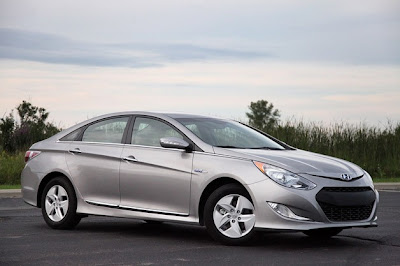
2011 Hyundai Sonata Hybrid

The auto show transition seemed to happen in a flash. One year, automakers were jockeying for dealer traffic with high horsepower, rear-wheel-drive retro rides, and the next year, each one of them ushered in a hybrid or electric vehicle. The paradigm shift was a welcome sight for car buyers wanting to shrink their carbon footprint and save money on fuel, but the majority of those products were years from production. Fast-forward to 2011, and the variety of fuel efficient transportation on offer in the industry has improved quite a bit, including this sleekly styled mid-size offering from Hyundai.
The Sonata Hybrid may have taken longer than expected to hit the market, but its lithium-polymer battery pack and host of fuel-saving features have given Hyundai 35 miles per gallon city and 40 mpg highway fuel economy numbers to flash before consumers. And the Sonata Hybrid isn't battling the competition on fuel economy alone. It also features attractive styling that sharply differentiates it from non-hybrid Sonata models, while also carrying an MSRP thousands of dollars less than the Toyota Camry Hybrid and Ford Fusion Hybrid.
We spent a week with a modestly equipped Sonata Hybrid, but rather than going light on the pedal to gather up as many Eco points as possible, we drove it like we would any mid-sized sedan to see if it could hang with the daily drudgery of suburban life.
Our Hyper Silver Metallic tester carried a very reasonable price tag of $25,930 (plus $720 shipping), and Hyundai kept that MSRP low by adding only floor mats ($100) and an iPod cable ($35) to the options list. Fortunately, the Sonata Hybrid already comes equipped with a boatload of standard features, including a six-speaker sound system with USB and auxiliary inputs, Bluetooth hands-free connectivity, automatic climate control, headlights with LED accents and a 4.2-inch LCD trip computer/hybrid technology display.
"Hybrid" and "low MSRP" generally don't go hand-in-hand, but the $25,795 base price of the Sonata only strengthens its case. This Hyundai also proves that hybrids don't have to be stodgy pods to achieve mpg bliss. The same Fluidic Design that's been a hit with the Sonata Hybrid's gas-only sibling looks just as good with a 30-kilowatt electric motor under the hood. And Hyundai hasn't simply slap on some Blue Motion badging to differentiate its hybrid offering from the hot-selling standard Sonata.
The biggest adjustment comes in the form of a gaping grille that looks like a whale shark on a plankton feeding frenzy. Further aero improvements come in the form of tweaked bodyside moldings and a more sharply truncated rear end with unique 'atom' element taillamps. In total, exterior engineering adjustments result in a drag coefficient that drops from .28 to an outstanding .25, the same number achieved by the benchmark Toyota Prius.
We dig the fact that the Sonata Hybrid looks quite a bit different than its sibling, and the Bill Nye taillights are something to behold. Heck, even the Blue Motion badging looks cool. For our money, there is one hybrid-only touch that just has to go: the standard 16-inch alloys. We're not sure what Hyundai's designers were going for here (at least beyond aero supremacy), but they ended up with a set of wheels that draws Blade-Runner-meets-Salad-Shooter comparisons. Luckily, Hyundai offers optional 17-inch wheels that look remarkably classier than the ones seen here. Unfortunately, the upsized wheels can only be had as part of the Premium Package, which will set buyers back another $5,000.
Nasty wheels aside, the Sonata Hybrid is a looker, and the interior isn't hard on the eyes, either. Hyundai has decided to carry over the same interior from the standard Sonata, save for some Blue Motion badging and the aforementioned 4.2-inch display. That means hybrid buyers get the same spacious cabin flush with attractive curves and soft-touch materials on the dash, doors and center console. Seats are comfortable and appropriately bolstered as well, and the driver's seat is power-adjustable. Another big plus comes in the form of a standard USB port and Bluetooth connectivity that quickly and easily syncs to a Bluetooth-enabled phone. And the 4.2-inch LED screen? It's bright, with easy-to-read graphics and various ways to dissect your driving habits. The Eco bars aren't nearly as interesting as the fanciful tree leaves adorning the display of the Lincoln MKZ Hybrid, but a driver's eyes should be focused on the road anyway.
The Sonata Hybrid's interior scores big with overall refinement and standard tech, but we observed a few chinks in its armor. The biggest issues are the rubbery steering wheel and shift knob, which makes an otherwise impressive cabin feel like a trip to the Walmart clearance rack. Adding leather to these items the driver touches most again requires the $5,000 Premium Package. Sure, the Ford Fusion Hybrid starts at $28,600 ($2,670 more than the Sonata), but it at least comes standard with a leather steering wheel and shift knob, plus a bunch of standard features that can only be had with Hyundai's Premium package.
The Sonata Hybrid is powered by a 2.4-liter four-cylinder engine with 166 horsepower at 6,000 RPM and 154 pound-feet of torque at 4,250 revs. Like other hybrids on the market, the Sonata Hybrid's 2.4-liter engine runs on the more efficient Atkinson cycle, which closes the intake valve late to provide a shorter compression stroke than traditional Otto cycle engines. But unlike many other hybrids that use an electric continuously variable transmission, Hyundai has opted to mate its powertrain to a more conventional six-speed automatic transmission. You'll hear no arguments here, as the transmission did its job well with a smooth operation and reassuring gear selections during our test.
Additionally, Hyundai didn't go with the cheaper, yet tried-and-tested nickel-metal hydride battery pack. Its engineers decided to start with a clean slate, diving feet-first into newer lithium polymer cells for power storage. The end game is a 1.4 kilowatt-hour battery pack that weighs only 96 pounds. The Blue Motion's electric motor isn't as powerful as those found under the hood of the 2012 Camry Hybrid (141 hp) and Fusion Hybrid (106 hp), but the 30 kilowatt motor still manages to generate 40 horsepower and 151 pound-feet of torque. Combined horsepower figures are 206 hp for the Sonata Hybrid, 200 hp for the Camry Hybrid and 191 for the Fusion Hybrid.
Numbers and specs can be fun, but real-world driving is where the Hankook Optimo rubber meets the road. And while the Sonata Hybrid's driving dynamics aren't particularly aggressive, this Sonata's hybrid system is. If you take your foot off the gas at most any speed, the engine turns off in a pinch and the regenerative braking system begins to charge the lithium battery. When the go pedal is handled with care and the speed kept under 70 mph, the electric motor and battery can move the car by themselves, thanks in part to an engine clutch that manages the gas engine and electric motor separately. Even better, the throttle doesn't have to be babied like many other hybrids do, giving the driver more time to enjoy gas-free motoring.
In the past, we'd practice a great deal of restraint when driving a hybrid, because trying to achieve the best possible fuel economy can actually be fun. But for us, the novelty of driving a hybrid in this way goes away after a week – just when the fuel economy game starts to become a bore. For that reason, we took pains to experience the Sonata Hybrid as we would any other mid-size sedan.
As a regular four-door, the Sonata Hybrid is plenty easy to live with. Power is strong off the line when needed, and the integrated starter generator goes about the job of switching the engine on and off without any major drama. The system isn't as smooth as the one under the hood of the Fusion Hybrid, but the tradeoff is that the Blue Drive system appears to be more aggressive when cutting off the power whenever it isn't needed.
The EPA tells us that Sonata Hybrid owners can expect fuel economy numbers of 40 mpg highway and 35 mpg in the city. Our experience with the hybrid Hyundai wasn't quite in the range of those numbers, as we managed 33.5 mpg in mixed driving, which falls below the EPA combined rating of 37 mpg. We weren't all that impressed with those results, and we're thinking that most diesel-powered mid-size entries would eclipse a combined score of 33.5 mpg. In fact, our Jetta TDI long-term fleet vehicle routinely averages more than 40 mpg. And although the Fusion Hybrid costs a bit more and relies on older nickel-metal tech, it still delivers better fuel economy numbers of 41 mpg city and 36 mpg highway. The new 2012 Camry Hybrid promises even better fuel economy, with an estimated 39 mpg highway and 43 mpg city. Just as troubling, in our experience, the standard 2.4-liter gas-only Sonata actually tends to return fuel economy figures above its 24/35 EPA numbers, particularly on the highway, so we have to wonder if the standard Sonata isn't the better overall bet when it comes to return-on-investment.
While we were less than impressed with the Sonata Hybrid's fuel thrift, we were pleased with its overall driving dynamics. At 3,578 pounds, the Sonata Hybrid is still light on its feet, with a structurally rigid chassis that doesn't flex at the slightest change of direction. Power delivery is smooth and predictable, with an estimated 0-60 mph time of about nine seconds. The steering is predictably free of hydraulics, yet Hyundai has chosen to dial in a bit more artificial heft than we expected or really want.
The Sonata Hybrid Blue Motion is a solid first foray into the world of mixed propulsion motoring for Hyundai. Would we have liked to see better fuel economy numbers? Absolutely. But there is still something to be said about a hybrid that can deliver good looks, solid fuel economy and a driving experience that isn't fun-free. Not every vehicle in this segment can make such a claim, and none can come within $1,000 of this Hyundai's $25,750 price of entry... at least until the 2012 Camry Hybrid goes on sale starting at $25,900.